
The Optimization Instinct
Civilizations spent centuries training their leaders with games. Then we told our kids to put them down.


I’ve always been a bit of an optimizer. There’s a voice in the back of my head that acts like a reflex—whenever a task or process presents itself, the voice speaks. It always asks the same two questions: can this be better? And, can this be easier?
The voice has served me well so far. And it took me my entire adult life, twenty years so far, to figure out that the same voice permanently parked in my brain absolutely does not exist in everyone. And since the world could not possibly be optimized until everyone truly does possess that voice, it has now become an obsession of mine to figure out how one obtains it.
Whatever it is, I have it. That’s not meant to be a boast. The voice presents almost like a curse. Coasting through life is not an option, and that can be exhausting. But what might be more exhausting? The drudgery of slow, repetitive work. So, I will take the curse with all its voodoo and reap the benefits too.
And as my wheels began turning on this question, I was struck by a thought: if this strange, optimizing voice benefits me, should I want to curse my sons with it?
The Older Curse
I am not the first person to ask this.
In 1812, a Prussian artillery officer named Georg von Reisswitz built a war game on a sand table. His son refined it to include terrain maps on a rigid grid. Wooden blocks for units. Dice that introduced uncertainty. And an umpire who controlled what each player could see. You didn’t get the whole board. You made decisions with partial information and lived with the results.
The Prussian General Staff adopted the younger Reisswitz’s game in the 1820s. This was not playtime. Rather, it was mandatory officer training. For forty years, Prussian officers sat at tables and played.
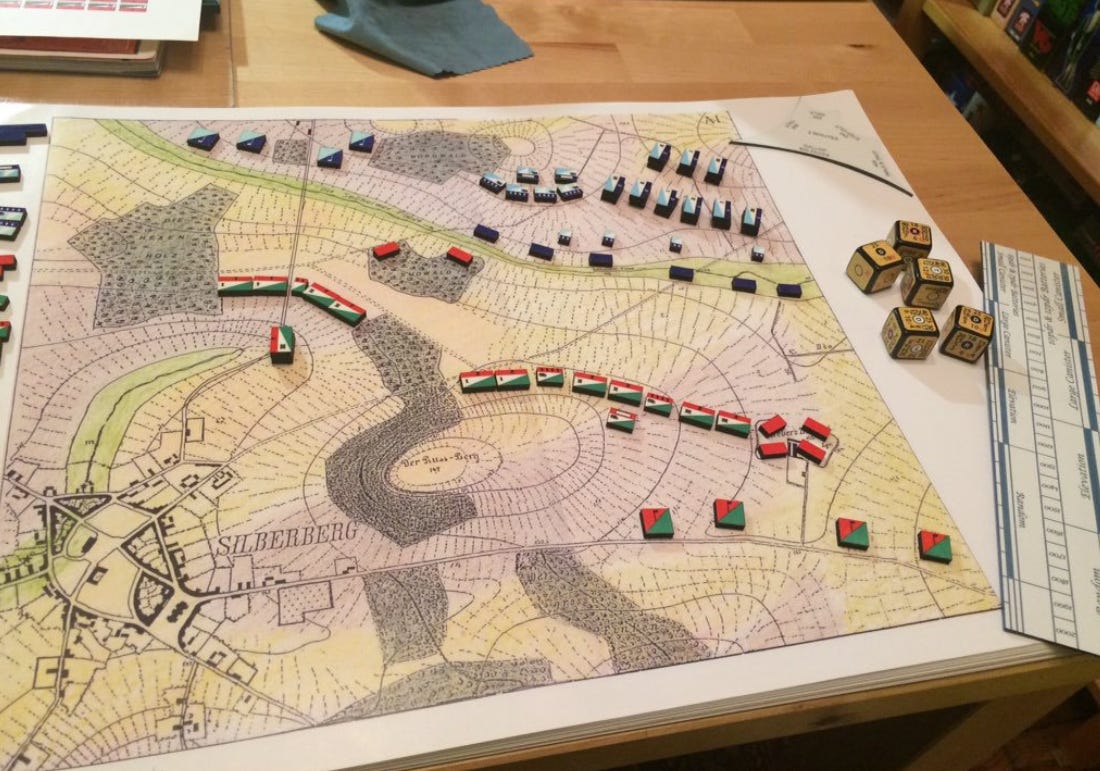
Then Prussia fought three wars in seven years. Denmark in 1864. Austria in 1866. France in 1870–71. The speed stunned Europe. Other nations sent observers, requested briefings, and asked what the Prussians were doing that nobody else was. One of the answers: they had been gaming their officers for four decades. The men who planned the campaigns had spent years making decisions under uncertainty at a table before they ever made one in the field.
Europe believed it. Britain, France, Russia, and Japan all copied Kriegsspiel. By the 1880s, the U.S. Naval War College had adopted wargaming and was running simulations of a Pacific conflict with Japan decades before Pearl Harbor. The Pentagon wargames today. NATO wargames. Every serious military on earth trains its officers partly through simulated strategic decision-making.
The Prussians wanted to curse their officers with strategic instinct. They did it by making them play a game.
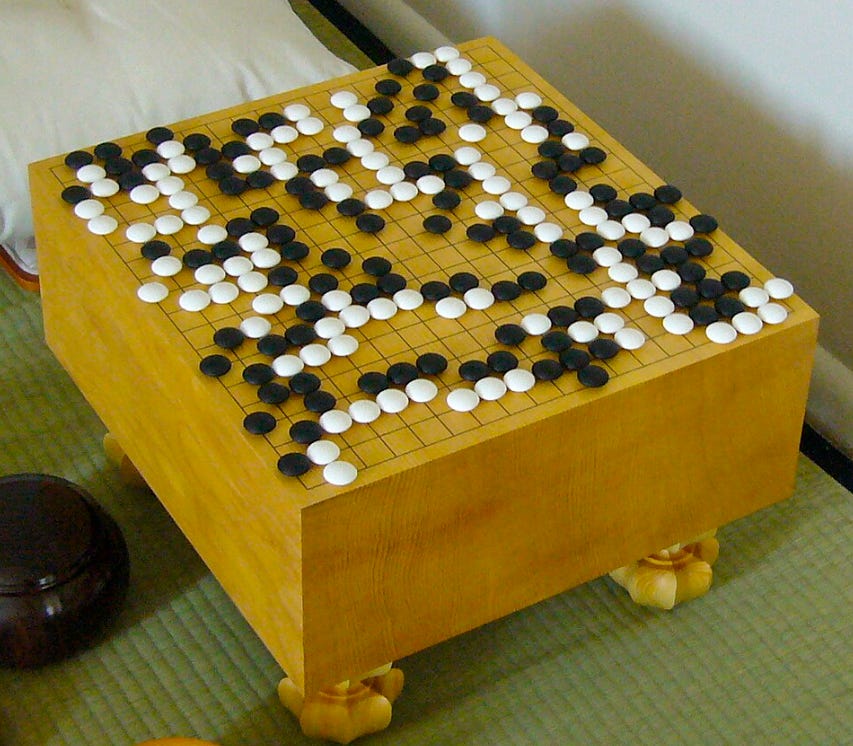
And they weren’t even the first. Go—围棋 (Wéiqí)—was one of the four classical arts of the Chinese scholar-gentleman, alongside calligraphy, painting, and music. A Song Dynasty official who couldn’t play would find his advancement opportunities limited. In sixth-century India, Chaturanga simulated a four-division army: infantry, cavalry, elephants, and chariots, and became the ancestor of chess. Different civilizations, different centuries, same conclusion: if you want better strategists, make them play strategy games.
The Fear
Somewhere between Kriegsspiel and the modern living room, the thread has been lost. More than that, it’s been vilified.
The cultural conversation about video games revolves around screen time, violence, addiction, and dopamine. Well-meaning parents have settled on games as a vice with near-religious certainty. The mental image driving the fear is the unsupervised kid parked in front of a screen for ten hours, slack-jawed, and wasting away.
It’s not easy to have a nuanced conversation about this, because we know that kid exists. But calibrating every conversation about games to the worst case is like calibrating every conversation about food to competitive eating.
Not every game trains the mind like Kriegsspiel did. Most aren’t. A game engineered to keep a child tapping is not the same as a game that forces a child to plan, allocate, and adapt. The conversation treats them as identical.
The further question is this: could the right games actually be a cognitive unlock?
I have played a lot of strategy games and role-playing games. Hundreds, maybe thousands of hours spent tweaking variables, resetting the board, and running a different strategy to see if the outcome changes. Allocating fixed pools of resources across competing priorities. Composing units whose strengths compensate for each other’s weaknesses. Reading terrain. Committing resources before knowing the outcome and adapting when the situation shifts.
These are not merely gaming skills. These are the same skills the Prussians were training in 1824, developed in a modern interface. The medium moved from sand table to screen. The cognitive requirement didn’t change: Allocate, compose, decide under uncertainty, adapt, and win.
Nobody called Kriegsspiel a waste of time. It produced the officers who won three wars decisively. The question is whether the modern version, stripped of its historical prestige and filed under “screen time,” does the same thing to a brain.
What the Lab Found
A growing body of research says it can.
In 2008, Chandramallika Basak and Arthur Kramer at the University of Illinois sat adults in their sixties and seventies down in front of a strategy game called Rise of Nations. The game asks players to build cities, manage economies, feed populations, maintain armies, and expand territory. The subjects trained for twenty-three and a half hours over five weeks.
The results went beyond the game. Researchers noted that task switching improved. Working memory improved. Reasoning improved. These were not just game-specific gains. The subjects got better at cognitive tasks they had never practiced, in formats that looked nothing like the game. The skills seemed to transfer.
In 2023, Daphne Bavelier’s lab at the University of Geneva published a meta-analysis covering 105 cross-sectional studies and 28 intervention studies. The finding: players of action and strategy games consistently outperform non-players in perception, attention, and cognitive control. And games that required simultaneous management of multiple objects, the hallmark of real-time strategy, showed transfer to attentional skills that had nothing to do with the game itself.
Learning to learn. That’s the optimization instinct described in the language of cognitive science. The voice in the back of my head that asks, “Can this be better?” is doing what Bavelier’s lab measured: scanning a system, allocating attention, identifying the variable that matters most, and adjusting.
And there’s a cherry on top too. The Bavelier lab’s research was funded by the U.S. Office of Naval Research. The military, the same institution that adopted Kriegsspiel two centuries ago, is still paying to find out whether games make people sharper. The thread never broke. It just disappeared from the conversation about children.
The Solo Advantage
The argument against games has always been a blanket. All games. All screens. All bad. The Prussians didn’t think that way. They measured whether Kriegsspiel produced better officers, and it did. The Chinese didn’t wonder whether Go was a waste of time. They made it one of four skills a cultivated person was expected to master.
There is a conversation worth having about which games train what, and at what cost. Board games can do some of it. You could sit your kid down with chess, or Monopoly, or a hex-and-counter wargame, and some of the cognitive load would transfer. But board games require an opponent, a schedule, and a willing participant across the table.
Computer games offer something else: rewarding solo play. A child alone with a strategy game is still composing units, still allocating resources, still making decisions under uncertainty, and watching the consequences unfold. The training doesn’t require a second player. It scales to one.
Would I like to curse my sons with the optimization instinct? Yes. And I think I know what the Prussians knew and what cognitive science is now confirming: the curse is transferable. The instrument is a game. The only thing standing in the way is a culture that forgot what games were built to do.
Training the next generation of strategists is far from a waste of time.